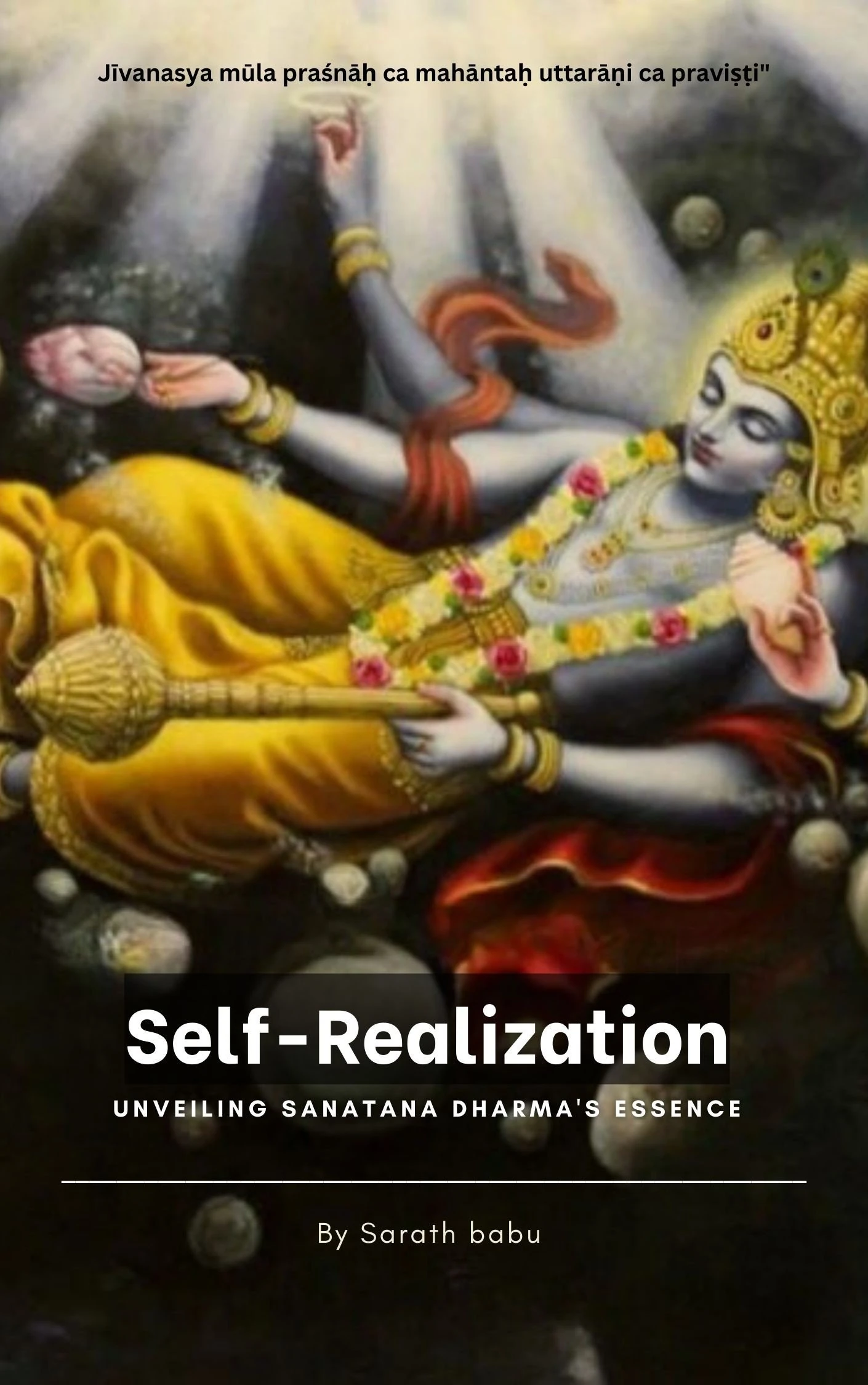
Self-Realization: Unveiling Sanatana Dharma's Essence
What Sanatana Dharma actually says about who you are, without the ritual and without asking you to believe anything first.
This was the first one, written when I was nineteen.
Sanatana Dharma has a lot to say about who you are, and most of what reaches people is the part around it: the ritual, the observance, the things you are told to do. The question underneath all of it gets less attention than any of that.
That question is what this book is about.
What it is not
Not a religious instruction. There is nothing here to follow, no practice to adopt, and no god you have to accept before the argument works.
I was reading these texts because the questions in them were the ones I already had. Who is the one asking. What is left when you remove everything you would call yourself. Whether the thing observing your thoughts is the same as the thing having them.
Those questions do not need a religion attached to be worth sitting with.
What it covers
The essence rather than the surface. What the tradition means by the self, why it distinguishes that from the mind, and what it is pointing at when it says the two are not the same thing.
45 pages, which is short on purpose. The ideas do not need length, and most of what makes them hard to reach is the volume of material surrounding them.
Reading it back
I wrote this in 2023, and I would write it differently now.
Māyā Interface is the same territory approached from another direction, three years later and in the vocabulary I actually think in. This one is more traditional and closer to its sources.
Both are trying to say the same thing. This was the first attempt.