If I Am Just Chemicals, Who Is Asking?
My thoughts on consciousness. If the body is just chemicals, why isn't the Earth conscious, can a machine be, and where would the soul sit.
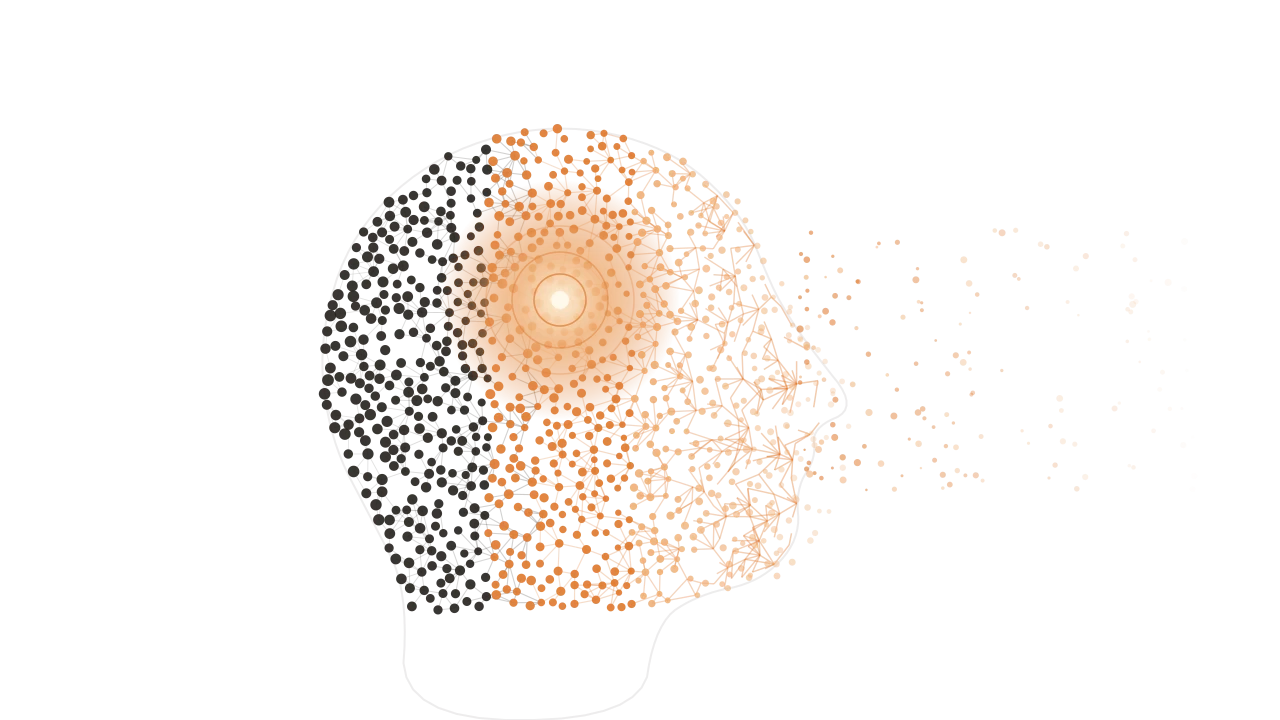
What is the human body made of? Mostly oxygen, carbon, hydrogen and nitrogen, with a little calcium, iron and zinc in the mix. The Earth is made of chemicals too. It is mostly iron, oxygen, silicon and magnesium, plus everything else in the periodic table. So both of us are just matter, and yet only one of us seems to feel anything.
The list has no person on it
What is everything in the human body made up of? What kind of chemicals are we made of?
Oxygen, carbon, hydrogen and nitrogen, mostly. Then calcium, iron, zinc, sodium, and the rest. Water, proteins, fats, DNA. Read the list slowly and notice that nobody is on it. Nothing in it says who is reading.
What is consciousness?
That missing someone is what I meant. Consciousness is the experience of being you, something felt from the inside. We know it follows brain activity, yet nobody can say how physical processes turn into a feeling.
If humans are just chemicals, and I replicate all these chemicals into something else, will it have the same consciousness? It's random chemicals only, right?
Not quite, and this is where it first got interesting. The same ingredients arranged differently do not make the same thing. A pile of carbon is not a brain. So whatever consciousness is, it seems to depend on how the matter is organised, not only on what it is. If a copy of my brain, built accurately enough, could also be conscious, then which of the two is the real me?
Why a planet full of minerals is not awake
I could not leave the ingredients alone, so I turned the same question on something bigger.
The Earth also has so many minerals, elements, and other things. Why wouldn't it be conscious? We are ordinary humans with some kind of chemicals. Earth has all the chemicals it needs.
There is no evidence that the Earth experiences anything. But the question is not silly. Some philosophers hold that experience may be a basic property of matter itself, which is called panpsychism. Equally, consciousness might need a very particular kind of organisation that a planet simply does not have.
It's unproven.
Yes, unproven. I have stopped treating that as a letdown. Unproven is a position you can actually stand on, and every honest answer later in this post ends up there.
The machine that sounds awake
If organisation is what matters, then the obvious next thing to ask about is the machines we are building.
Will AI become conscious?
I do not know, and I distrust anyone who says they do. A machine can produce language that sounds conscious. Sounding conscious proves nothing, because sounding is exactly what language models are built to do. If consciousness comes from certain kinds of computation, a machine could have it. If it needs a living body, it could not.
That pushed me back to the brain, to check what I was even assuming.
Let's say our consciousness comes from the brain. Is that true or not?
The evidence says yes. Anesthesia switches it off, sleep interrupts it, and brain injury changes it. What nobody has explained is the step after that: how activity in the brain becomes something that feels like anything.
If I move a human brain into a robot, will it be conscious like a human?
If the brain stays alive and healthy, I think so. The body would not be what decides it. The real problems are practical: keeping the brain alive, and wiring it to a machine.
Then what is the thing that makes a brain conscious?
We do not know. That sentence is the centre of this whole post.
We can map almost everything the brain does. We cannot yet say why any of it feels like something.
Mapping a fly is not waking one up
So how far has the mapping actually got? I wanted to know how much of this could be tested rather than argued.
How much do we actually know about our brain? To really test this, what do I need to do?
A lot about structure: neurons, circuits, memory, the chemicals that carry signals. Very little about how it all becomes one experience. To test the idea the questions have to become testable. Study what changes consciousness in sleep, anesthesia and injury. Build models of the brain. And there is one thought experiment I cannot stop turning over, which is replacing neurons one at a time with artificial ones.
That was on my mind when I asked about the newest example.
Check the recent fruit fly brain copied by Google DeepMind. Explain that entire thing. People are doing so many things with it. What should we consider?
The headlines said the fly brain was copied. I went to the source, and it is a smaller claim than that. In A connectomics milestone, published in September 2026, Google Research and HHMI Janelia, with the MRC Laboratory of Molecular Biology, the University of Cambridge and others, describe the complete wiring diagram of a male fruit fly brain and its nerve cord: over 166,000 neurons and 125 million synaptic connections. It appeared in Cell.
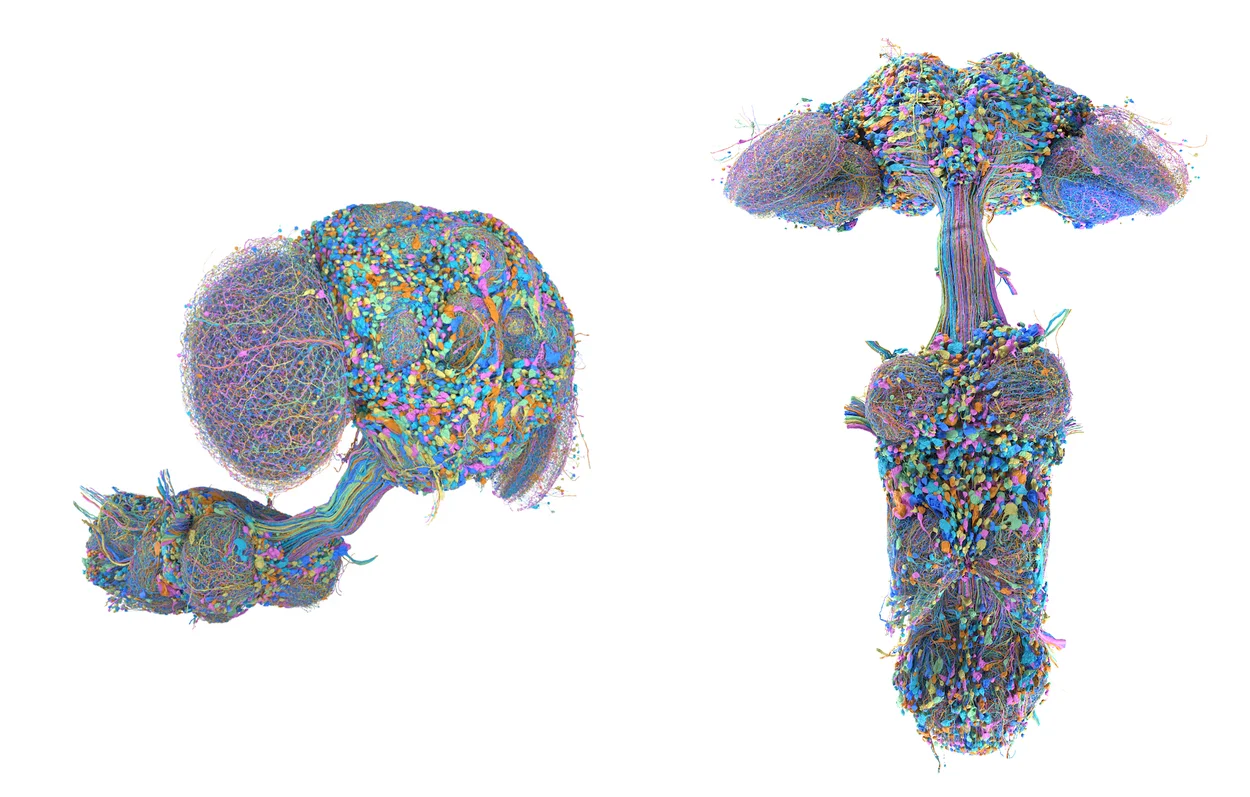
The method is worth knowing. The brain tissue is cut into very thin slices. Each slice is imaged under an electron microscope, and AI stitches the images into 3D shapes of the neurons, which human experts then proofread. Even now that proofreading takes years of human effort.
A connectome is a static resource. It is a map of the wiring, not a copy of the fly.
That is the line I would hold on to. The post itself calls the connectome a static resource, and it does not describe a simulation of the fly's activity. It will help researchers trace how what a fly sees, hears and smells reaches its muscles, and compare male and female brains for courtship and aggression. Those are real findings. They are not a mind running on a machine. Even for a fruit fly the authors say modelling the human brain's 86 billion neurons remains out of reach.
So three different things sit close together, and are easy to blur:
- Mapping a brain's physical connections. This is what was done.
- Reproducing its activity and behaviour in a model.
- Showing that the model actually experiences something.
The first is research that now exists. The second is a goal. The third is still wide open. Most arguments about machine consciousness go wrong by quietly jumping from number one to number three.
Where my soul would sit in the robot
By now I had a brain in a robot and no way to say what made it aware. That is where the word everyone already uses for this came up.
If machines are also made up of chemicals, why can't a machine become conscious if it has those chemicals? Or is this another rabbit hole about the soul that we already have? People say we have a soul. What is that?
It means different things depending on who is speaking. In many religions it is a non-physical essence, what makes you you beyond the body. In philosophy it is a question about identity and whether a mind can exist without a body. Science has not found a separate non-physical thing that explains consciousness. So take the robot again. If my brain ran a robotic body, where would my soul be? In the brain, in the body, somewhere else? I have not met anyone who has a real answer.
And then the part that bothered me most, the thing people say about it.
People say, "Don't satisfy society. Satisfy your soul." But according to the scriptures, does the soul even need to be satisfied with something? Isn't it the brain that needs satisfaction, the hormonal discharge, dopamine, that makes us feel relaxed?
Both can be true, because they are answering different questions. Biology describes how reward, motivation and relief work in the body, and dopamine is less a happiness chemical than a signal about wanting and learning. When someone says satisfy your soul, they usually mean living by what they value and doing what feels meaningful. One is a mechanism. The other is about meaning. Neither cancels the other, and neither settles whether a soul exists as a separate thing.
The race I was told to run
All of this had been about the brain, and then it turned around to me.
I'm the kind of person who questions a lot of things: consciousness, quantum physics, our brain, society, and all that.
Questioning helps me separate three piles: what is known, what is only believed, and what is uncertain. The danger is falling in love with my own assumptions, so a question is only worth asking if I will change my mind when the evidence says so. That is also why I turned it on society.
Present-generation society has developed a system. Everybody is stuck in the 9-to-5 cycle. Work, earn money, get married, have children, settle down, retire, and die. People follow this without questioning it. For someone like me, who questions these things, is it worth doing? Or should I just follow the same path?
Questioning the default path is worth it if it makes you live on purpose. But rejecting something only because it is common is not wiser than following it without thinking. Both are ways of not choosing.
Does this kind of thinking actually help anybody?
It does when it turns into decisions: knowing why you work, why you want what you want, and not believing something only because everyone around you does. Questions on their own do not make anyone wise.
Question the default path, but question your alternatives too.
I still don't know who is asking
Every question so far sat outside me. This last one is the one that does not.
What should I do with my life? I say I am conscious, but I don't think I'm fully conscious of myself. I still have random desires. I still don't know who I really am. If I were truly conscious, wouldn't I know who I am? I don't think I'm just a chemical body.
Here is what I keep landing on. Not knowing who you are does not mean you are not conscious. You can notice your thoughts and desires, and still be working out why they are there and whether to act on them. You do not need a finished, permanent self before you are allowed to live a meaningful life.
Roughly, what kind of life would that look like?
One built on choices, not on automatic yes. I would still work, but I would know why, and what the work makes possible. I would learn, build, reflect and adjust. I would not reject marriage, family, a job or retirement by reflex. I would decide whether each fits what I value, even if that means keeping a stable job while building something of my own beside it.
Looking back, the whole thing moved from matter, to experience, to identity, to meaning, and finally to the one question that is not abstract at all: how to live.
I do not have the answers. I have a clearer map of the questions, and that was worth writing down.