The LiFT Scholarship
The Linux Foundation gave me a free course and exam. Then work swallowed three months, and when I came back the thing stopping me was that no good practice environment existed.
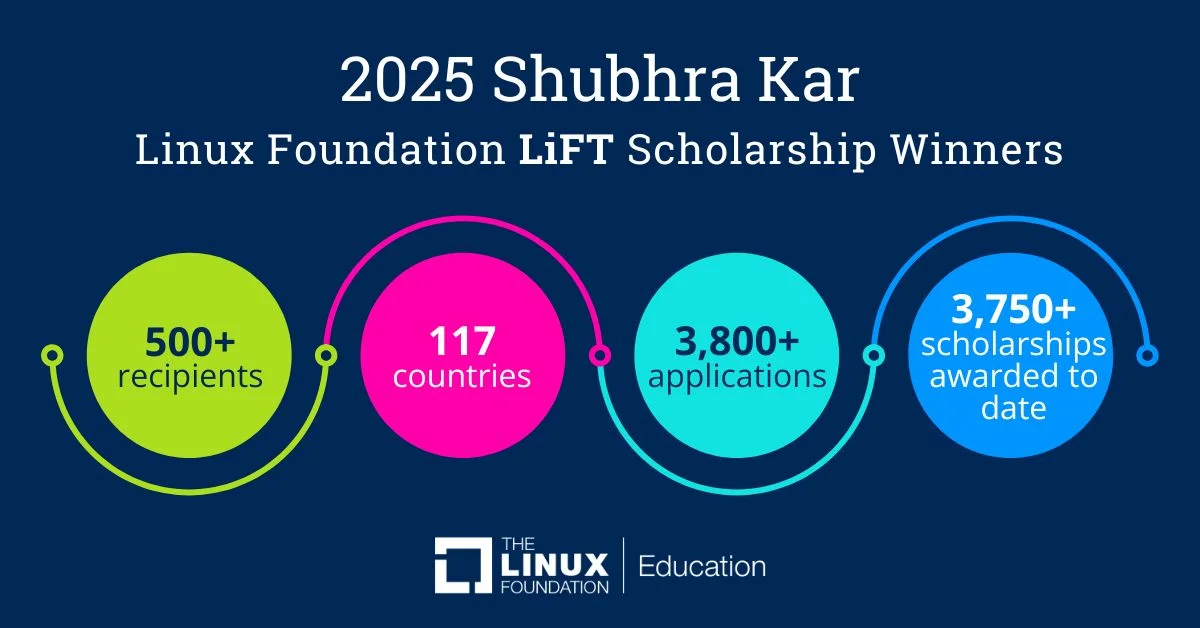
I applied for the Shubhra Kar Linux Foundation Training (LiFT) scholarship and got it.
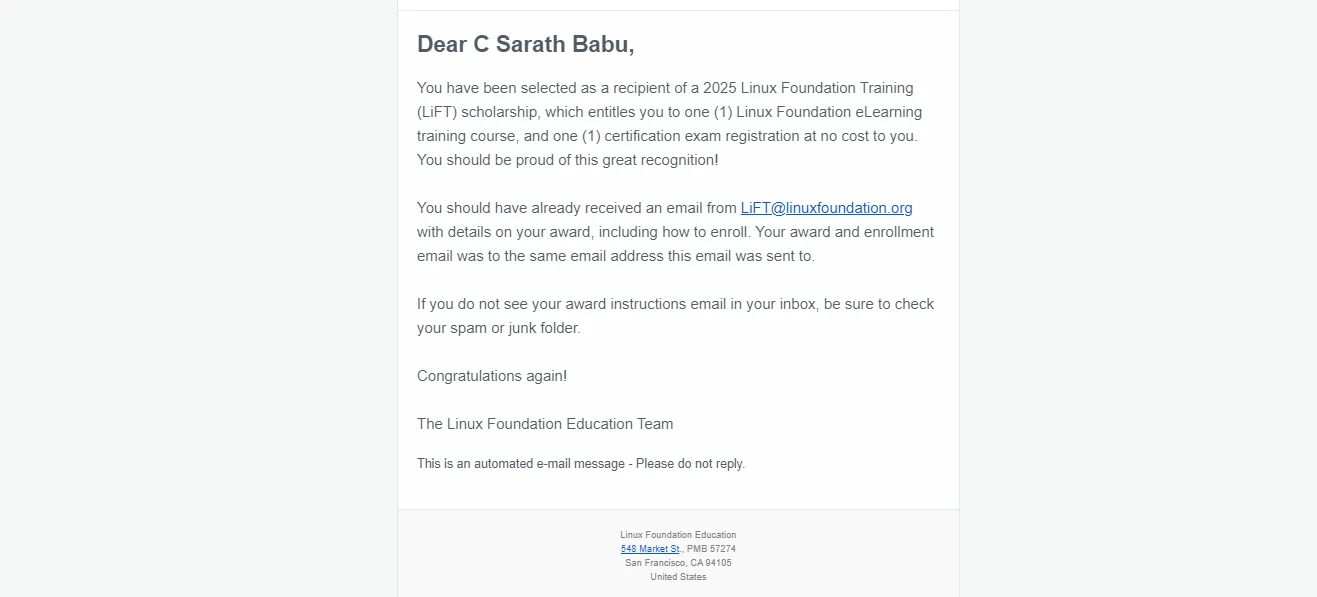
One free eLearning course, one certification exam registration. I picked LFCS, Linux Foundation Certified System Administrator.
500 recipients out of more than 3,800 applications. Ages 16 to 68, across 117 countries. I was glad to be in that list.
Then I did nothing with it for three months.
What actually happened
I started practising immediately, the way you do when something is new.
Then work took over. Meetings, deadlines, projects, the ordinary weight of a job. Finding a clear block of time to sit with Linux administration stopped being possible.
July. August. September.
The real blocker
When I finally cleared time in October, I found the problem was not time at all.
Two things stopped me:
- No practice environment. Studying LFCS means breaking things, fixing permissions, misconfiguring services on purpose. You need a machine you can destroy and reset. Doing that on your own system is a bad idea and setting up fresh VMs every session is its own chore.
- No structured questions. Plenty of study material exists. Almost none of it is a set of realistic tasks with a way to check whether you actually got it right.
I was not blocked on knowing Linux. I was blocked on having anywhere to practise it properly.
So I built it
October, I stopped looking for the tool and wrote it.
Docker containers, one per scenario, thrown away after. 83 real LFCS tasks drawn from the exam domains. Automatic validation, so when you exit the shell the tool checks the actual system state and tells you whether you solved it.
By November it was working.
The thing standing between me and the exam was a tool that did not exist, so the fastest route to the exam was building it.It is on PyPI now.
pip install lfcsPyPI · GitHub · the project write-up
What I took from it
Not the certification. The habit underneath it.
Three months of "I do not have time" turned out to be three months of an unnamed obstacle. Once I sat down and asked what specifically was stopping me, the answer was concrete, and concrete problems can be built around.
Sometimes you have to build what you need.
Thanks
To The Linux Foundation and Linux Foundation Education, for the scholarship and for running a programme that reaches people who would not otherwise pay for this training.
3,750+ scholarships awarded to date, across 117 countries and ages 16 to 68. Mine was one of them, and the tool at the end of this post exists because of it.