Why Do We Keep Craving Attention?
On a trip, at work, on the steps of a temple and inside families, I keep seeing people crave attention. I do it too, and I still don't know why.
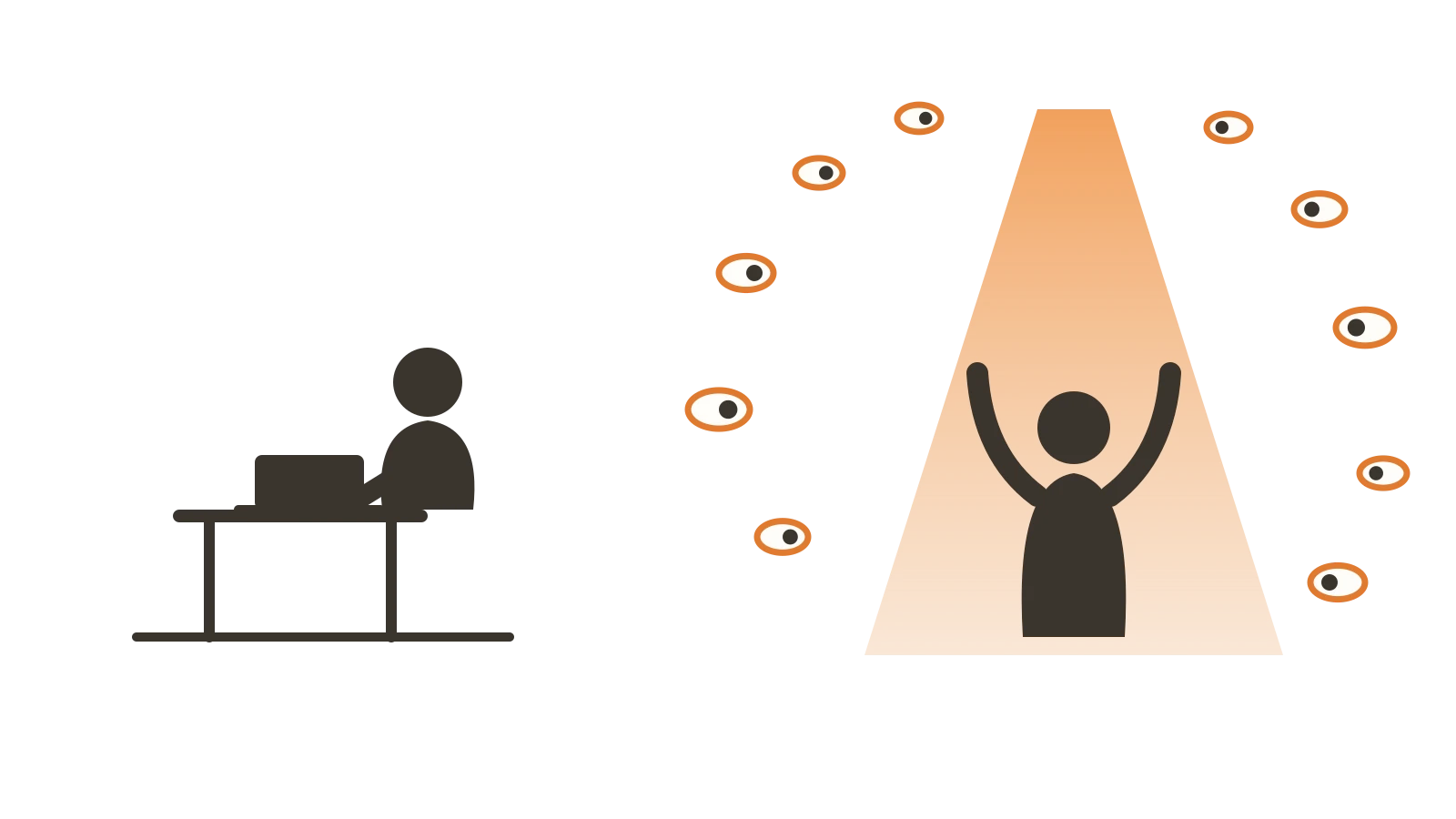
I constantly crave attention, and I know it. It feels better to be seen as an interesting person than to actually be interested in something. It feels better to say that I am doing something than to do it in front of anyone. I have had this question for a long time and I still don't have a clean answer. Why do we crave attention?
It is in every relationship I can think of, so I started collecting examples.
Why do we try to impress a stranger?
Picture a group of men on a trip. It feels great. Nobody has to pay any attention to anybody, and nobody is trying to impress anyone.
Now a girl joins the same trip. Suddenly everybody is trying to impress her. She is a random person. She doesn't belong to any of them and isn't related to them. Still, every one of them finds a way.
You can say it is hormones, and part of it probably is. But I keep asking what is underneath that.
Why do we chase a manager's attention?
Take a manager at work. You keep chasing his attention because you want a salary hike. No hormones are involved, nobody is trying to be liked in that way, and it is still the same behaviour. You want to be noticed by the person who has power over what happens to you.
Giving attention and taking it. Everybody is doing one or the other, and they are oddly desperate about it.
What would I do with nobody around?
This is the thought I get stuck on.
If nobody validates you for something you did, does anything change? If somebody does, whether it is praise or criticism, will that person stay in your life or leave? Usually nothing happens either way. So what is all this craving for?
I don't think I would. That tells me it was never really about the thing. It was about someone watching.
Why does praise feel so good?
Why does praise feel so good, and why does it feel so bad when nobody gives any?
I don't think the words are the point. Attention says something underneath them: I see you, you matter, you belong here. For most of human history, being pushed out of a group cost you real things, like protection, food and people to work with. So the mind learned to treat being noticed as a sign that you are safe, and being ignored as the start of danger.
It isn't a decision about whether to care. It is an old alarm that still goes off.
I don't know if that makes attention a fundamental instinct in the strict sense. The need underneath it, to belong, is very old, and craving attention looks like what that need has turned into today.
Why is it so hard to stop checking?
Attention also hooks easily, and the hook works like this.
A reward that comes at unpredictable moments is the one that makes us keep checking, and attention comes exactly like that.
Why take photos on the steps and skip the temple?
Recently I visited the ISKCON temple in Bangalore. A lot of families had come, wearing their best clothes. Many of them never went inside. They stood on the steps when the weather was good, at sunrise or sunset, took photos of themselves and the view, and left.
Inside, I did not feel like I was seeing real bhakti in most people. When somebody said "Hare Krishna", others said it too, because the person next to them did. I could be wrong, because I can't see inside anyone. But what many of them seemed to want was to post the photos and videos. Not to admire anything, and not to follow the principles the place is about.
I didn't understand why people want it that badly.
Why does one boy's result bother the other side?
The same thing happens at home, and it is sharper there.
Take a family with two brothers, and each brother has a son. When one boy does something good, the other side wants their boy to do something similar, or better, to prove something. I really don't understand what the idea behind that is. If some other person's child gets a good result, what difference does it make to you?
Or look at a mother whose son gets married. She gets angry with his wife, because the wife is taking away the attention that used to be hers.
Does praise from the same field count more?
What about praise from someone in the same race as you, compared with someone from outside your world?
Praise from your own field counts for more. They know what the work takes, so their opinion carries weight. Someone from outside is kind, but it lands lightly because they can't judge it.
It works the other way as well. A billionaire doesn't threaten me much. Someone my age, in the same field, doing well does, because they feel like a version of me that went further. The people whose praise matters most are the same ones who can hurt the most.
Why does a win need someone to see it?
Then there is the odd part. You finally get something you actually wanted, and getting it isn't enough. You want someone to know.
Nobody gives you a number for your own worth, so we use other people to check where we stand. Until someone sees it, a win can feel half finished, as if it hasn't been confirmed yet.
Am I doing it, or telling people I'm doing it?
Why does it feel like I am telling that I'm doing something, instead of doing the thing?
I can notice when that switches. At the start, the work is the point. Then somewhere along the way the telling becomes the point, and the work turns into material for it. That is when attention has stopped being a bonus and become the goal.
If the answer is yes, the attention is a nice extra. If it isn't, I am doing it for the audience.
Is being looked at the same as being known?
A hundred thousand people can watch you and none of them know you. One person who says "I understand you" can mean more. I think the craving underneath is to be seen properly, not only looked at.
I can have a lot of attention and little validation. I can have both and still feel shaky. And I can have very little of either and be fine. Enjoying attention is not the problem. Using it as proof that I'm worth something is.
What does nirvana ask of us?
Buddhism and Adi Shankaracharya's idea of nirvana shatakam say the same thing in different words: detach from everything and you are free.
That makes sense to me on paper. But the habit is still there in everyone. People read it and keep craving anyway, so knowing it isn't enough to change it.
What I still don't know
I don't know why attention is so strong across all of humanity, and I don't know why people will do so much for it. I'm still working it out. There are far more examples than these, and I am in all of them too.